2026 State of the County
The 2026 State of the County address emphasizes continuity, stability, and forward-looking investments built on more than a decade of steady leadership. The County Executive frames progress around a long-term vision focused on economic strength, safe and healthy communities, expanded transit, and fiscal responsibility, highlighting trust, collaboration, and disciplined governance as core drivers of success.
A central priority outlined is countywide transit expansion, positioned as a critical connector to jobs, healthcare, education, and recreation across Wayne County’s 43 communities. The administration is actively coordinating with municipalities and preparing voters for an upcoming decision, emphasizing that improved transit is essential toContinue reading
The 2026 State of the County address emphasizes continuity, stability, and forward-looking investments built on more than a decade of steady leadership. The County Executive frames progress around a long-term vision focused on economic strength, safe and healthy communities, expanded transit, and fiscal responsibility, highlighting trust, collaboration, and disciplined governance as core drivers of success.
A central priority outlined is countywide transit expansion, positioned as a critical connector to jobs, healthcare, education, and recreation across Wayne County’s 43 communities. The administration is actively coordinating with municipalities and preparing voters for an upcoming decision, emphasizing that improved transit is essential to economic equity and regional competitiveness. Transit is also framed broadly to include aviation, with a new Aviation & Aeronautics Career Program aimed at building a local workforce pipeline for high-demand aviation and maintenance careers.
The address highlights efforts to reduce the financial burden on residents, particularly through a proposed student loan support partnership with Savi, designed to help residents and employees lower payments and pursue loan forgiveness at no cost. Workforce development remains a major focus through WayneLINC, a $20 million investment connecting residents—especially veterans and individuals with barriers to employment—to training and jobs. Support for entrepreneurship is expanding through Elevate Wayne, a new small business hub offering planning, legal, financial, and capital access assistance.
On fiscal management, the County reports its 11th consecutive balanced budget, continued improvement in credit ratings, and targeted investments in food access, public safety, housing assistance, medical debt relief, and family support programs. Public health initiatives are highlighted, including Rx Kids, which provides direct financial support to expectant and new mothers, expanded access to healthy food through Fresh Trucks, and nationally recognized air quality monitoring efforts.
Public safety efforts show significant reductions in violent crime, supported by enforcement, regional collaboration, and prevention strategies focused on youth and community-based intervention. Infrastructure investments are also emphasized, including major stormwater and wastewater upgrades, road resurfacing, bridge replacements, and long-anticipated transportation projects.
The address closes by reinforcing a message of One Wayne County—stressing collaboration across governments, departments, and communities—and positioning the county as fiscally stable, safer, healthier, and prepared for continued growth despite broader economic and political uncertainty.
-
Warren Evans Bets Big on ‘One Wayne County,’ But Will Transit, Trust, and Tough Love Be Enough?
 Jeremy Allen, Executive Editor
Michigan Chronicle
In a county long defined by fragmentation – city versus suburb, east versus west, Detroit versus everyone else – Wayne County Executive Warren C. Evans is making perhaps his most audacious pitch yet: that after more than a decade of steady stewardship, Wayne County is ready to think and act like one community.
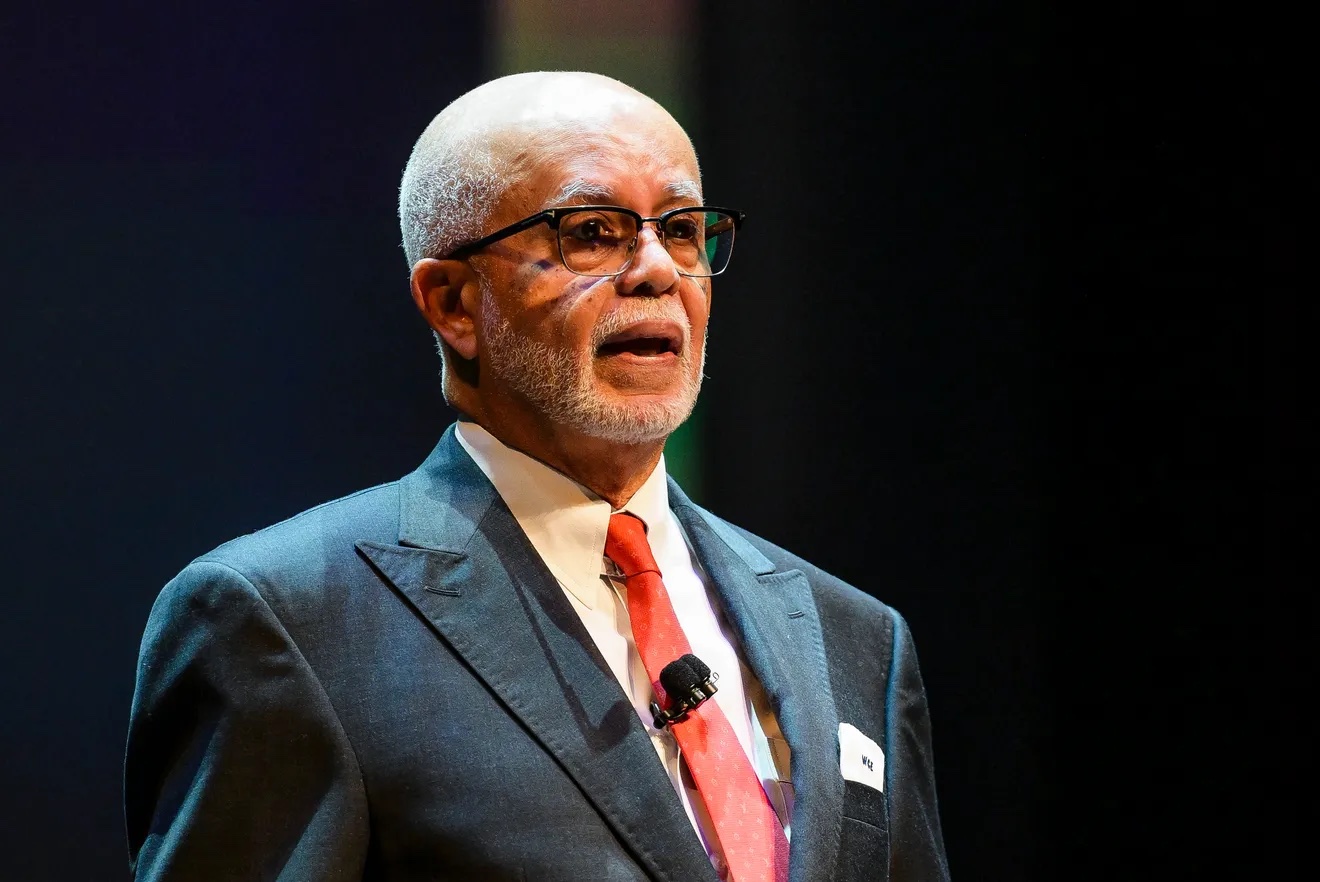
Inside a packed auditorium at the Ford Community & Performing Arts Center in Dearborn, Evans delivered his 11th State of the County address with the confidence of a leader who has survived fiscal crisis, political crosswinds and the slow grind ofContinue reading
Jeremy Allen, Executive Editor
Michigan Chronicle
In a county long defined by fragmentation – city versus suburb, east versus west, Detroit versus everyone else – Wayne County Executive Warren C. Evans is making perhaps his most audacious pitch yet: that after more than a decade of steady stewardship, Wayne County is ready to think and act like one community.
Inside a packed auditorium at the Ford Community & Performing Arts Center in Dearborn, Evans delivered his 11th State of the County address with the confidence of a leader who has survived fiscal crisis, political crosswinds and the slow grind of rebuilding public trust.
His message was equal parts report card and roadmap, while he recounted the milestones that have stabilized the county’s finances and reduced violent crime, paired with new initiatives aimed at transit expansion, workforce pipelines, student debt relief and maternal health.
“This trust was built through steady leadership, transparency, and a commitment to doing the work,” Evans said. “I’m grateful for that trust, and I’m proud of what we’ve accomplished.”
The applause he got throughout the night wasn’t for his just rousing speech, but instead it was for 11 consecutive balanced budgets. That achievement seemed improbable a decade ago, when Wayne County was struggling with structural deficits and questions about long-term solvency. Under Evans’ tenure, the county has climbed back from the brink, with Moody’s once again raising Wayne County’s credit rating last year.
“Last year, Moody’s once again raised Wayne County’s credit rating. It is another sign that our fiscal house remains strong,” Evans said. “We’ve worked hard to earn and protect that reputation through careful planning and responsible stewardship.”
In his 2025 address, Evans had centered fiscal discipline as the foundation for everything, arguing that without financial stability, none of the county’s ambitions would be sustainable.
A year later, that stability appears intact. The balanced budgets have continued. The improved credit rating lowers borrowing costs for infrastructure and capital projects. For residents, that translates into more reliable services and the ability to invest without returning to the cycle of cuts and crisis.
But Evans is no longer content to run a tight ship. He wants to move it.
Perhaps the most consequential proposal unveiled this year is the push for expanded countywide transit. For decades, Wayne County’s transit landscape has been shaped by a patchwork of opt-outs, political stalemates and uneven service. Now, with the repeal of a decades-old opt-out clause, voters will have the opportunity to weigh in on a countywide transit proposal aimed at strengthening regional mobility.
The Evans administration has worked with the Regional Transit Authority, SMART and all 43 municipalities to craft a framework aligned with what he calls “One Wayne County.”
“Wayne County consists of 43 municipalities, but we are one community,” he said. “One county with one shared future. We’re stronger together.”
Transit has long been more than a transportation issue in Wayne County, as residents and leadership alike see it as an economic justice issue. Access to reliable transit can determine whether a resident can reach a job in Livonia, an internship at Metro Airport, or a class at Wayne State University.
In his 2025 address, Evans spoke about breaking down barriers to opportunity and knitting the region closer together. This year’s transit proposal is a tangible step toward that promise, though it will ultimately beup to voters to decide whether the vision becomes reality.
Public safety, another cornerstone of last year’s address, remains central to Evans’ narrative of progress. In 2025, he highlighted the early impact of the county’s Violent Crime Reduction Initiative and pledged continued cross-agency collaboration. Now, he points to measurable outcomes.
“When we launched this initiative, there were 323 homicides,” said Executive Evans. “We’ve knocked that down by 49 percent. Even one homicide is still one too many, but we’re making progress that is being felt throughout all 43 communities.”
The data he cited – homicides down 49 percent and non-fatal shootings down 62 percent since 2020, with carjackings in Detroit reduced by 64 percent – reflects a coordinated strategy involving local law enforcement, prosecutors and community partners.
For a region that has grappled with national headlines about violence, the numbers represent a rebuttal to the narrative that urban counties cannot bend the curve on crime without sacrificing reform.
Yet Evans is careful not to declare victory. His acknowledgment that “even one homicide is still one too many” underscores the delicate balance between celebrating progress and recognizing the work that remains.
Beyond crime and transit, Evans is investing in what he describes as long-term economic resilience. One of the most intriguing initiatives involves aviation and aeronautics education. Eleven Wayne County school districts are now facilitating an Aviation Technician Pathway curriculum designed to prepare students for careers in piloting, maintenance and advanced air mobility. With Michigan anticipating a need for 250 new aircraft mechanics by 2032, the program aims to build a local pipeline to meet that demand.
Some districts begin the curriculum as early as elementary school, positioning students to pursue piloting, drone technology and aviation maintenance as they advance. The County Executive’s Office is working with Wayne RESA to secure funding for a comprehensive program.
The aviation initiative reflects a broader theme from Evans’ 2025 address, which it so align education with workforce demand. Last year, he emphasized the need to connect young people to high-growth industries within the county. The aviation pathway is a direct response, leveraging the presence of Detroit Metropolitan Airport and related industries to create opportunities that keep talent rooted in Wayne County.
At the same time, Evans addressed student loan debt, which is a financial burden weighing heavily on residents. Wayne County is partnering with Savi to offer free, personalized assistance to residents navigating more than $7 billion in student loan debt. The program will provide guidance on lowering payments and pursuing loan forgiveness, with a contract currently before the Commission and launch expected later this year.
For a county where many young professionals and working families carry substantial debt loads, the initiative represents a recognition that economic mobility is not just about job access but about financial breathing room. It also builds on Evans’ 2025 call to improve residents’ overall financial health, extending the county’s fiscal discipline to household balance sheets.
Perhaps the most quietly transformative program highlighted in the address is Rx Kids. Launched in November across six communities, the initiative has already delivered more than $1.5 million to over 900 families and welcomed more than 500 newborns. Expecting mothers receive a $1,500 prenatal payment and $500 per month for the first six months after birth, helping cover essentials such as medical care, baby formula,and clothing. Detroit joined the charge two months later after Mayor Mary Sheffield was inaugurated, making Rx Kids one of her first official initiatives as Detroit’s mayor.
In a state and nation where debates over maternal health and child poverty are often ideological, Rx Kids is practical and direct. It places resources in the hands of families at a critical moment. The early numbers suggest strong uptake, and if sustained, the program could become a model for other counties seeking to address infant well-being and economic stability simultaneously.
Infrastructure, too, remains high on Evans’ agenda. In 2025, he warned about aging systems and the growing threat of extreme weather. This year, he pointed to progress including ongoing bridge replacements, a record number of road improvements, and a $70 million stormwater initiative that has swept approximately 2,500 miles of roads and cleaned more than 6,500 catch basins.
“We’re seeing more extreme weather and more unpredictable storms,” Executive Evans said. “That means the infrastructure we relied on for decades has to work as intended and it currently does not.”
The statement is both a diagnosis and a challenge. Climate volatility has exposed vulnerabilities in Southeast Michigan’s infrastructure, from flooded basements to impassable roads. By investing in stormwater management and maintenance, the county is attempting to get ahead of the next crisis rather than merely reacting to it.
Throughout the address, Evans returned to the theme of unity as a governing philosophy. The idea of “One Wayne County” runs through transit expansion, crime reduction, education pipelines, and fiscal management, he said. It is an attempt to transcend the boundaries that have historically divided the county’s 43 municipalities.
“We don’t just talk about hopes and dreams,” he said. “We work with anyone willing to work to make those dreams real.”
The test of that philosophy will come in the months ahead. Voters will weigh in on transit. The student loan assistance program will move from proposal to practice. Aviation pathways will either secure sustained funding or struggle to scale. Crime trends will need to hold amid shifting national dynamics. And the county’s financial health will face new pressures as federal and state policies evolve.
For now, Evans is betting that a decade of disciplined governance has earned him the credibility to ask residents to think bigger. His 2026 address was a pivot from stabilization to expansion.
The question facing Wayne County is whether its residents are ready to embrace the proposition that their futures are intertwined. Evans has made his case. The next chapter of “One Wayne County” will be written not from a podium, but at the ballot box and in the daily lives of the people he serves.
-
Evans highlights transit expansion, infrastructure, crime reduction and fiscal stability in 2026 State of the County address
The Arab American News Staff Local
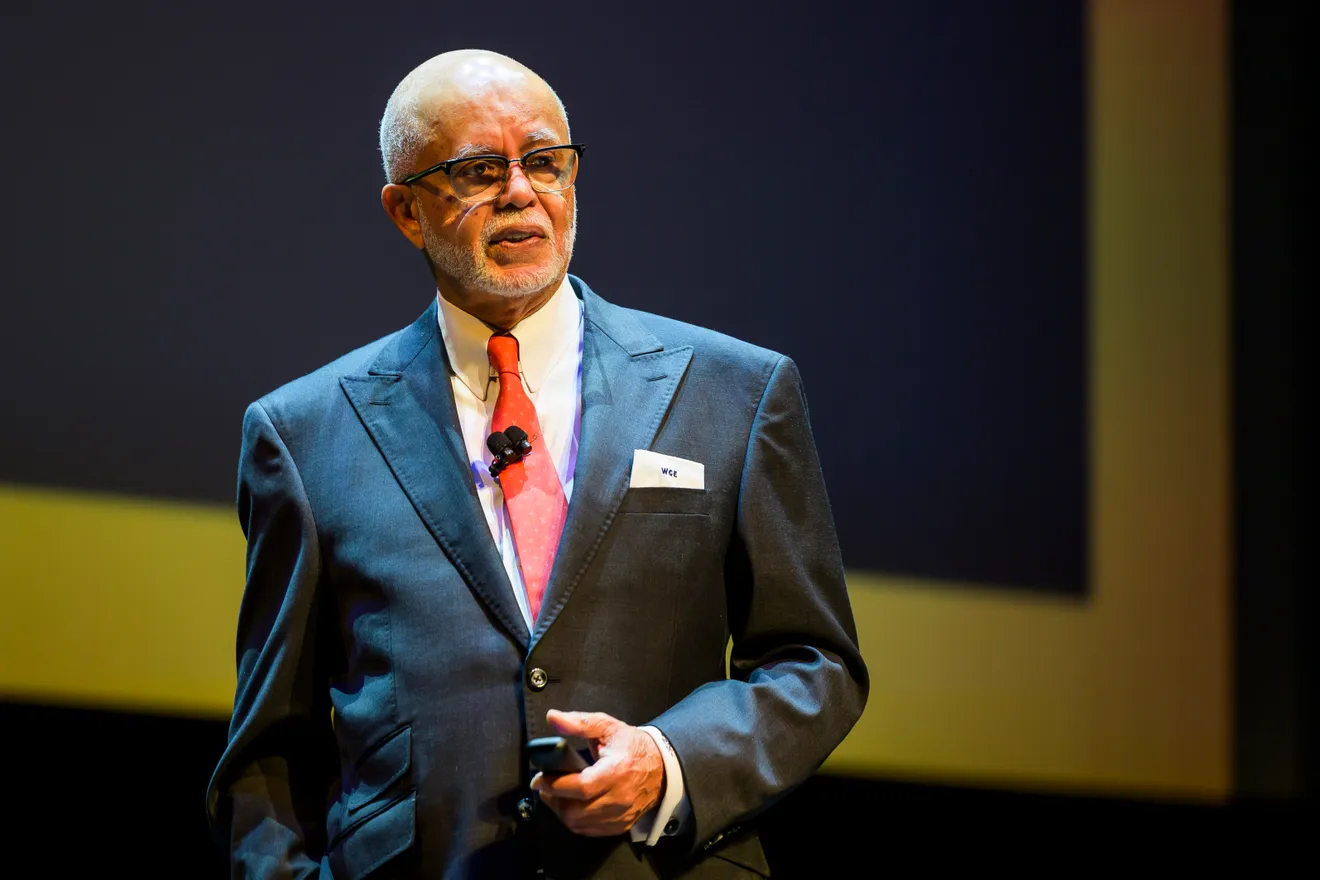
DEARBORN — Wayne County Executive Warren C. Evans delivered his 11th annual State of the County address Wednesday at the Ford Community & Performing Arts Center, outlining major milestones in fiscal stability and public safety while unveiling new initiatives focused on transit, education and long-term economic health.
Before his address, Evans was introduced in a video presentation by Wayne County Deputy Executive Assad Turfe, who praised the county executive’s leadership and accomplishments over nearly 12 years in office.
The event drew a wide array of local and state leaders, judges and prominent community figuresContinue reading
The Arab American News Staff Local
DEARBORN — Wayne County Executive Warren C. Evans delivered his 11th annual State of the County address Wednesday at the Ford Community & Performing Arts Center, outlining major milestones in fiscal stability and public safety while unveiling new initiatives focused on transit, education and long-term economic health.
Before his address, Evans was introduced in a video presentation by Wayne County Deputy Executive Assad Turfe, who praised the county executive’s leadership and accomplishments over nearly 12 years in office.
The event drew a wide array of local and state leaders, judges and prominent community figures. Those in attendance included Michigan Secretary of State Jocelyn Benson, Michigan Attorney General Dana Nessel, Detroit Mayor Mary Sheffield, Dearborn Heights Mayor Mo Baydoun, Macomb County Executive Mark Hackel, Oakland County Executive Dave Coulter, Wayne County Sheriff Ray Washington, Wayne County Undersheriff Mike Jaafar, Wayne County Clerk Cathy Garrett, Wayne County Treasurer Eric Sabree and Wayne County Register of Deeds Bernard J. Youngblood, along with members of the Wayne County Commission and other elected officials.
Speaking before a full auditorium, Evans reflected on his tenure, emphasizing steady leadership, transparency and collaboration across Wayne County’s 43 municipalities.
“This trust was built through steady leadership, transparency and a commitment to doing the work,” Evans said. “I’m grateful for that trust, and I’m proud of what we’ve accomplished.”
Eleven years of balanced budgets
Evans pointed to 11 consecutive years of balanced budgets as a cornerstone achievement of his administration, along with continued improvements in the county’s financial standing.
Last year, Moody’s once again raised Wayne County’s credit rating — a signal, Evans said, that fiscal discipline remains intact.
“We’ve worked hard to earn and protect that reputation through careful planning and responsible stewardship,” he said.
Transit proposal heads to voters
A central announcement involved regional transportation. Following the repeal of a decades-old opt-out clause, Wayne County voters will have the opportunity to decide on a countywide transit proposal aimed at significantly strengthening regional mobility.
The administration has worked closely with the Regional Transit Authority, SMART and all 43 communities to develop what Evans described as a unified transit framework under his “One Wayne County” vision — a plan designed to bring residents closer together through improved connectivity.
Aviation workforce development
Evans also highlighted workforce initiatives in aviation and aeronautics. Eleven Wayne County school districts are currently offering an Aviation Technician Pathway curriculum, preparing students for careers in piloting, maintenance and advanced air mobility.
Michigan is projected to need approximately 250 new aircraft mechanics by 2032. Some districts are introducing aviation-focused education beginning at the elementary level, allowing students to pursue piloting, drone technology and aviation maintenance as they advance. The County Executive’s Office is working with Wayne RESA to secure funding for a comprehensive countywide program.
Student loan support program
To address the more than $7 billion in student loan debt held by Wayne County residents, the county is partnering with Savi to offer free, personalized assistance to borrowers. The program will help residents explore lower payment options and pursue loan forgiveness.
The contract is currently before the Wayne County Commission and, if approved, is expected to launch later this year.
Rx Kids provides direct support to families
Evans also cited the early impact of the Rx Kids program, launched in November across six communities. The initiative has already delivered more than $1.5 million in support to over 900 families and welcomed more than 500 newborns.
The program provides expectant mothers with a $1,500 prenatal payment and $500 per month for the first six months after birth, helping families cover essential needs such as medical care, formula and clothing.
Public safety gains continue
On public safety, Evans credited the county’s Violent Crime Reduction Initiative and cross-agency collaboration for significant declines in crime since 2020.
Carjackings in Detroit have dropped by 64 percent, while homicides countywide are down 49 percent and nonfatal shootings have decreased by 62 percent.
“Even one homicide is still one too many, but we’re making progress that is being felt throughout all 43 communities,” Evans said.
Infrastructure and stormwater investments
Evans underscored major infrastructure investments, including bridge replacements and a record number of road improvements. He also highlighted a $70 million stormwater initiative that has swept approximately 2,500 miles of roads and cleaned more than 6,500 catch basins.
“We’re seeing more extreme weather and more unpredictable storms,” Evans said. “That means the infrastructure we relied on for decades has to work as intended — and it currently does not.”
“One county with one shared future”
Throughout the address, Evans emphasized unity across Wayne County’s diverse communities.
“Wayne County consists of 43 municipalities, but we are one community — one county with one shared future. We’re stronger together.”
He closed by reaffirming his commitment to collaboration and tangible results.
“We don’t just talk about hopes and dreams,” Evans said. “We work with anyone willing to work to make those dreams real.”
-
2026 State of Wayne County talks student debt relief, public transit funding
Natalie Davies
Detroit Free Press
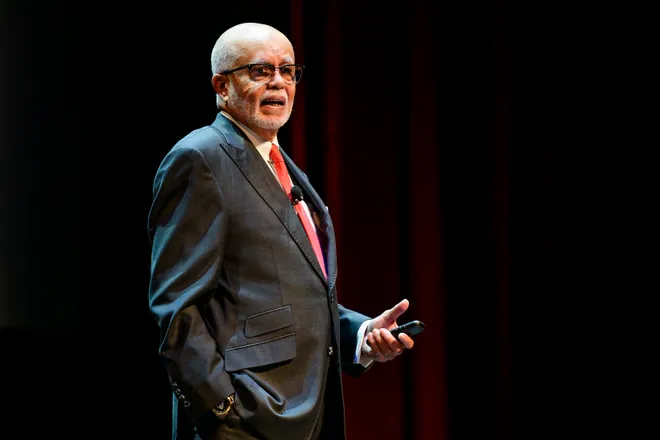
A packed house of public officials and Wayne County community members filled the Ford Community and Performing Arts Center in Dearborn on Wednesday, Feb. 11, to hear about the state of the largest and most diverse county in Michigan.Wayne County Executive Warren Evans spoke about the ways he’s worked with the 43 Wayne County communities over the past year and what he plans for the county in 2026 and beyond.
From the Rx Kids launching in 2025 to a student debt relief partnership hoping to launch in 2026, here's what to know about theContinue reading
Natalie Davies
Detroit Free Press
A packed house of public officials and Wayne County community members filled the Ford Community and Performing Arts Center in Dearborn on Wednesday, Feb. 11, to hear about the state of the largest and most diverse county in Michigan.Wayne County Executive Warren Evans spoke about the ways he’s worked with the 43 Wayne County communities over the past year and what he plans for the county in 2026 and beyond.
From the Rx Kids launching in 2025 to a student debt relief partnership hoping to launch in 2026, here's what to know about the state of Wayne County.
Transit
Evans said transit is one of his biggest county priorities for 2026.
"We’re the largest and most diverse county in Michigan, with attractions that draw visitors from across the country," Evans said. "And yet some of our own residents haven’t experienced these attractions because they have no reliable way to get there."
Wayne County has been working with Suburban Mobility Authority for Regional Transportation (SMART) and the Regional Transit Authority to gather feedback from the 43 communities in Wayne County, especially in the 17 communities that opted out of regional transportation, Evans said.
In August 2026, Wayne County voters will vote on a proposal to "keep the millage rate steady at 0.98 mills and apply that structure countywide so all 43 communities can be part of one connected system," SMART General Manager and CEO Tiffany Gunter said in a statement to the Free Press on Friday, Feb. 13.
"The goal is to end today’s patchwork approach (to transit) and build a modern mobility network that improves access, efficiency, and regional coordination across Wayne, Oakland, and Macomb counties," Gunter said.
The language for the proposal is still being drafted, Gunter said.
"As details are finalized, the County will provide clear information so voters understand what the proposal would do before it appears on the ballot," Gunter said
In February, SMART released a Wayne County Transit Evaluation report discussing the current use of public transportation, demand for more public transportation, as well as potential expansions for the county if the ballot proposal is approved by voters.
Student debt relief
Evans announced the county will partner with Savi, a technology startup that helps users manage student debt, to support borrowers and lower monthly payments.
In Wayne County, more than 200,000 residents carry more than $7 billion combined in student loan debt, Evans said.
Oakland County created a similar partnership in 2024. Oakland has helped more than 6,000 residents save nearly $30 million a year, Evans said.
Savi is an AI-driven benefits platform and 1:1 expert support that can help users navigate student loan repayment and forgiveness programs, save for retirement and discover new education options, according to its website.
Evans said a contract has been submitted to the Wayne County Commission, and he hopes the program will be fully underway later in 2026.
Money for jobs
Wayne County assists people in their career journeys through its WayneLINC program, Evans said. The county has invested $20 million in the workforce training and development program, Evans said.
Evans said the county is launching a small business hub to help entrepreneurs move from idea to growth with free or low-cost support.
Affordable housing
Evans said the county has committed more than $1 million in down payment assistance and awarded preliminary letters to over a dozen affordable housing projects.
The down payment assistance program is for purchasers who have not owned a home within the last three years. People who are interested in the program should contact National Faith Community Homebuyers at (313) 255-9500 to enroll, according to the county's website.
Wayne County got Rx Kids
Rx Kids, a program giving mothers cash assistance mid-pregnancy and for 6-12 months after birth, launched in six Wayne County communities in November 2025. Detroit launched the program in January 2026.
Aviation programs in Wayne County schools
Evans hopes to create an Aviation and Aeronautics Career Program with the Wayne Regional Educational Service Agency program for students at Wayne County Schools, he said.
"We have a world-class airport in Wayne County," Evans said. "Now we need a world-class feeder system for the jobs the airport creates."
Michigan expects 250 aircraft mechanic openings are expected to become available by 2032, Evans said. Eleven schools participate in the Aviation and Aeronautics Career Program currently, and Evans hopes all 33 districts in the county will take it on and that students will be equipped to fill all of the open jobs.
-
Evans vows to create Wayne County pipeline for airport jobs in speech
Max Bryan
The Detroit News
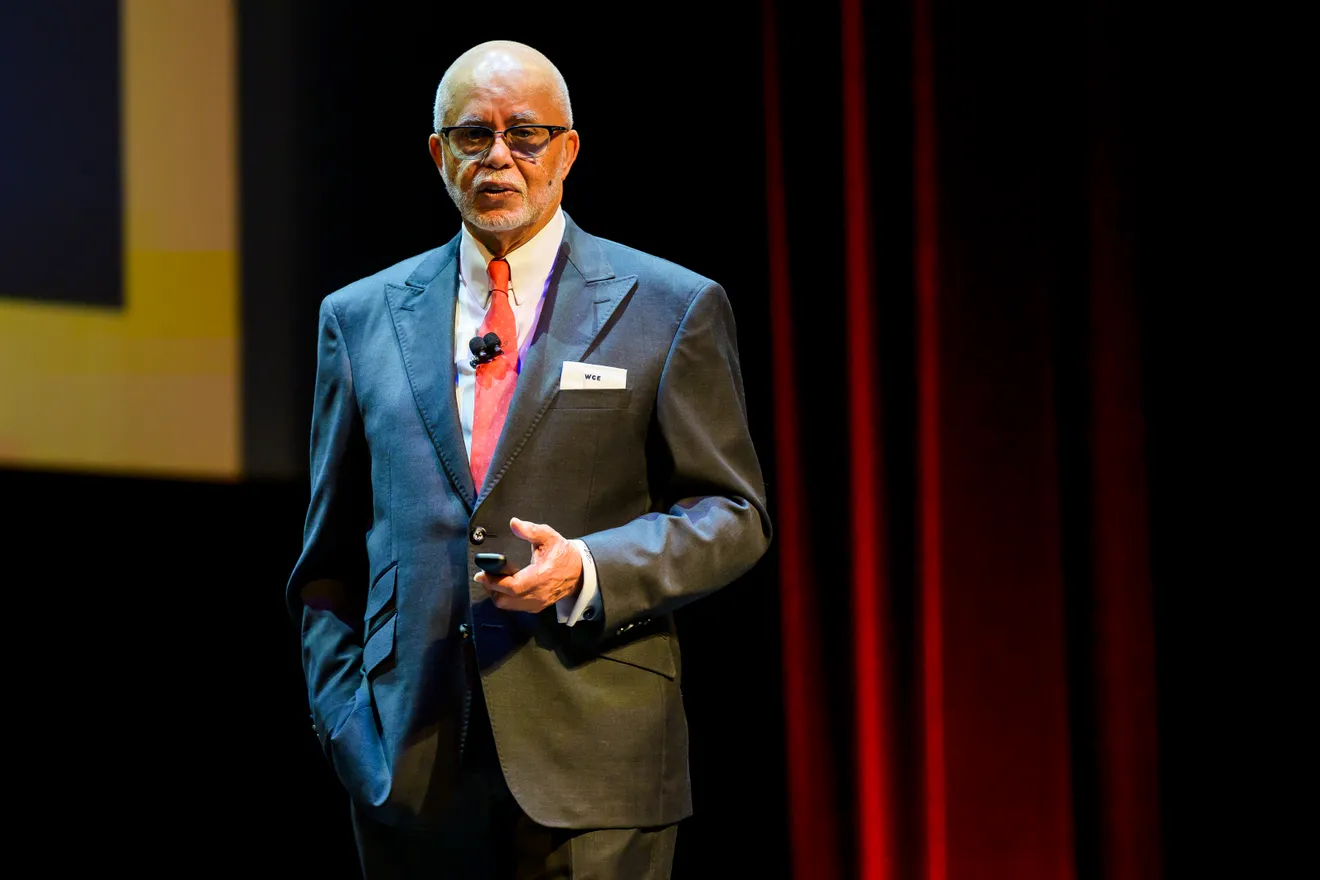
Wayne County Executive Warren Evans is focusing on creating job applicants to fill jobs at Detroit Metro Airport, part of a focus on transportation and public health that he highlighted in his State of the County speech.Evans is working with the Wayne Regional Educational Service Agency to fund an aviation and aeronautics career program aimed at feeding qualified job applicants to Detroit Metro Airport.
The effort comes amid an estimated 250 aircraft mechanic openings in the state by 2032 ― a need that could be filled through eight students from each of the county'sContinue reading
Max Bryan
The Detroit News
Wayne County Executive Warren Evans is focusing on creating job applicants to fill jobs at Detroit Metro Airport, part of a focus on transportation and public health that he highlighted in his State of the County speech.Evans is working with the Wayne Regional Educational Service Agency to fund an aviation and aeronautics career program aimed at feeding qualified job applicants to Detroit Metro Airport.
The effort comes amid an estimated 250 aircraft mechanic openings in the state by 2032 ― a need that could be filled through eight students from each of the county's 33 school districts, Evans said. Eleven of those districts are participating in the county's curriculum, he said.
"Students are training in aviation as early as elementary school," Evans said. "By the time they reach high school and college, they'll be prepared to learn piloting skills, drone technology, and aviation maintenance."
Wayne County Commission Chairwoman Alisha Bell praised the aviation program.
"We have to prepare our students to be ready for the jobs of the future, and aviation is definitely a job of the future for mechanics, flight, drones, all that that encompasses," Bell said.
Evans, who is in his third term, applauded county spending on public safety, the county's balanced budget and plans to improve infrastructure. He addressed a crowd at the Ford Community & Performing Arts Center in Dearborn.
Commissioner Angelique Peterson-Mayberry said she appreciated how comprehensive Evans' address was, which included visual aids.“While we’re at committee meetings and sitting through them and through our full commission board, it’s nice to see everything bundled and packaged in a way that we can see everything come together," Peterson-Mayberry said.
Evans, 77, said the county has launched a $70 million stormwater maintenance project to handle extreme weather and storms. The county has swept more than 2,500 miles of road and cleaned more than 6,000 catch basins, he said.The county has resurfaced 286 miles of roads, Evans said. He highlighted the Allen Road Grade Separation, which is expected to be completed by the summer 2028, and the county has spent $50 million to replace the Miller Rotunda bridge in Dearborn.
Terry Marecki, the only Republican on the county commission, said she's pleased with how the county has addressed road repairs. She said it's expensive because the county pays for all of the township roads as well as main thoroughfares in cities.Evans said he is working with the Regional Transit Authority and the Suburban Mobility Authority for Regional Transportation to gather feedback from all 43 communities in Wayne County, including 17 that have opted out of regional public transit. The county has proposed new transit routes, route extensions and micro-transit.
Evans talked about how the county tracks air quality and public health disparities related to it. He said the county worked with Democratic U.S. Reps. Debbie Dingell of Ann Arbor and Rashida Tlaib of Detroit to stop radioactive waste from being shipped from New York to the area. The county has diverted 800,000 pounds of hazardous waste to date, he said.The county has also expanded healthy food access through its Fresh Trucks program, which brings produce into neighborhoods. The initiative was included in the latest budget passed by the county, he said.
The budget includes help for first-time homebuyers, medical debt relief, workforce training and crime reduction. The county's violent-crime reduction efforts have helped bring homicides in the county below 200 and cut the number of carjackings and nonfatal shootings by more than half since 2020, the former Wayne County sheriff said.
Evans said the county is "living through some challenging times" when it comes to government support from Lansing and Washington, D.C.
Evans thanked the county commissioners and members of his executive Cabinet for their achievements.
"We've worked to bring this vision to reality for the nearly 12 years I've been your county executive," Evans said.
mbryan@detroitnews.com

-
 Click here to play video
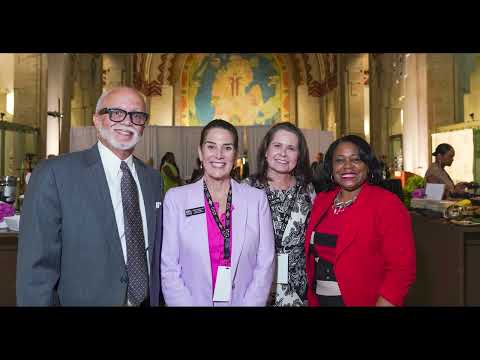
State of the County Introduction
Click here to play video
State of the County Introduction
-
 Click here to play video
Aeronautics
Click here to play video
Aeronautics
-
 Click here to play video
Waynelinc
Click here to play video
Waynelinc
-
 Click here to play video
rx Kids
Click here to play video
rx Kids
-
 Click here to play video
Catch Basins and Street Sweeping
Click here to play video
Catch Basins and Street Sweeping